Credit Card Debt Problems
By Ethan Hunter
What to Do If You Hit the Debt Mire
When debt goes bad, it becomes more than just a financial
problem. It can take over your life. If you have a debt problem
the earlier it is handled and dealt with, the less likely it’ll
turn into a crisis, and the more money you’ll save in the
fullness of time.
The very nature of borrowing means that interest increases over
time and if it isn’t dealt with promptly, it can spiral out of
control and land you into trouble. Particularly with credit
cards, when interest payments are large, and a minimum payment
offers a seemingly manageable solution; what is actually
happening is this: the balance is being eroded like the sea
bites away at the shore. It’ll disappear into the ocean
eventually, but might take many years to do so. What you need
is a more radical approach, where chunks of debt are eaten away
each month.
Being in debt can be a stressful time. Many people are scared
to tell husbands, wives, friends – anyone. There’s a kind of
stigma attached to the problem, but there is always a way out.
Traditional debt advice proscribes borrowing your way out of a
problem. Yet this ignores the reality of most debts. A more
advisable and realistic approach would be to never borrow more
to get out of debt trouble. If it is possible to borrow more
cheaply elsewhere to replace existing borrowing and consolidate
your debt, then this is an eminently sensible approach.
The first step should always be to work out your monthly
outgoings and try and trim down your spending on luxuries and
things you can do without. This doesn’t mean you have to live
the life of a monk and forgo all worldly pleasures! But by
adopting sensible spending patterns you can redirect some of
your monthly income into paying off your outstanding balances.
Always keep at the front of your mind the fact that the longer
the debt smolders away, the more you spend in interest
payments.
Those with big debts may save thousands a year in interest by
reconsidering their borrowing commitments. Do this in three
ways:
i) Lower the interest if possible by moving your debts to
reduce the interest cost.
ii) Pay the worst first: prioritize paying off the highest
interest rate debts first
iii) Utilize any free debt advice there is. A non-commercial
agency will give you good advice, focus you on your priorities,
and place any problems in context. Things may not be as bad as
they first seem.
Of course, there’s other basic, practicable things you can do
on your own. It's incredibly important to get on top of credit
card debts as soon as possible. Don't default or miss payments.
Let the credit card company know if you are going to be unable
to pay – it’s always better to talk to them than putting your
head in the sand.
If things aren’t that bad, there’s a variety of easy strategies
you can implement that will help ease things for you. Consider a
credit card balance transfer to a lender offering a lower rate
of APR. This will mean you spend less on interest payments each
month and start to attack the overall balance with real venom.
You could take out an unsecured loan as a way of consolidating
your debt. Personal loans can give you a consistent cheap debt,
and as you must make the repayments each month, it helps provide
structure to your repayments. Those with poorer credit scores
might not always get decent rates, but it’s still often a
cheaper option than paying back credit card debt each month,
and overall a faster method of repayment.
If you have them, use savings: The interest paid on savings is
usually far less than interest charged on borrowing, so paying
off debts with savings makes eminent sense. Even if you think
of your savings as an ‘emergency cash fund’ or money for the
future, better to fall back on it in the short term and pay it
back later, than paying interest to a credit card company so
that money for some far flung eventuality is at your disposal.
It’s worth mentioning that for many people, credit cards
provide sensible short term, flexible lending, that’s both
cheap and convenient. You should always try and proceed
cautiously, but credit card debt woes are not an inevitable
consequence of taking them out. Tens of millions of Americans
use credit cards cheaply and conveniently every year.
For those who feel they are in trouble, don’t feel stigmatized
by your debt woes and don’t pretend they’re not there. Help is
at hand should you seek it, and a solution is never far away.
About the Author: Ethan Hunter is the author of many credit
related articles. If you are looking for help with Home Loans
or any type of credit issue please visit us at
http://www.creditcardunlimited.com
Source: http://www.isnare.com
Monday, April 30, 2007


Saturday, April 28, 2007
Credit Card Terminals
Poor Credit Score? Find The Best Bad Credit Card
By Adam Goldman
Having a poor credit rating can seriously limit your choices of
credit cards. Most credit card companies are likely to turn down
your applications, making things tough for you at a time when
you most need a credit card. Fortunately though, that’s not the
end of it as you have another option of bad credit cards.
Naturally, this is a temporary solution until you can get back
on your feet. Bad credit cards can also be used to help you
improve your credit score, as long as you pay your credit card
bills on time, that is. The only drawback to this would
obviously be the higher than usual APR interests.
Nevertheless, if you are willing to provide collateral to the
credit card company, you may qualify for a secured bad credit
card with a lower APR. This way, you can still earn interests
on your collateral, and simultaneously enjoy good rates. The
downside is, you may be charged other fees such as annual fees
or start up fees.
Before you apply for a bad credit card, it is prudent to do
your homework first. As bad credit cards are usually offered to
those with poor credit ratings, the APR would unlikely be low.
Thus, comparing the various offers of bad credit cards out
there would be a wise move.
One of the primary factors of consideration includes the
upfront fees that credit card companies would charge you. In
order to make a wise evaluation, it’s best that you have a plan
to pay off your debt before your interests snowball. Other
factors that you can use to help you make a better decision
would be to analyze the reward programs that your bad credit
card can offer. If you are entitled for retail discounts at
specific retail stores when you charge to your bad credit card,
this would be even more enticing.
With all these factors to consider, it is clear that you should
look around before you apply for a bad credit card. Compare and
contrast the various fees and rates of the candidate companies.
Only after careful consideration should you take the next move
and submit your application.
About the Author: Adam Goldman recommends Find Credit Cards for
finding the best bad credit card. See
http://www.findcreditcards.org/type/bad-credit.php for more
information.
Source: http://www.isnare.com
By Adam Goldman
Having a poor credit rating can seriously limit your choices of
credit cards. Most credit card companies are likely to turn down
your applications, making things tough for you at a time when
you most need a credit card. Fortunately though, that’s not the
end of it as you have another option of bad credit cards.
Naturally, this is a temporary solution until you can get back
on your feet. Bad credit cards can also be used to help you
improve your credit score, as long as you pay your credit card
bills on time, that is. The only drawback to this would
obviously be the higher than usual APR interests.
Nevertheless, if you are willing to provide collateral to the
credit card company, you may qualify for a secured bad credit
card with a lower APR. This way, you can still earn interests
on your collateral, and simultaneously enjoy good rates. The
downside is, you may be charged other fees such as annual fees
or start up fees.
Before you apply for a bad credit card, it is prudent to do
your homework first. As bad credit cards are usually offered to
those with poor credit ratings, the APR would unlikely be low.
Thus, comparing the various offers of bad credit cards out
there would be a wise move.
One of the primary factors of consideration includes the
upfront fees that credit card companies would charge you. In
order to make a wise evaluation, it’s best that you have a plan
to pay off your debt before your interests snowball. Other
factors that you can use to help you make a better decision
would be to analyze the reward programs that your bad credit
card can offer. If you are entitled for retail discounts at
specific retail stores when you charge to your bad credit card,
this would be even more enticing.
With all these factors to consider, it is clear that you should
look around before you apply for a bad credit card. Compare and
contrast the various fees and rates of the candidate companies.
Only after careful consideration should you take the next move
and submit your application.
About the Author: Adam Goldman recommends Find Credit Cards for
finding the best bad credit card. See
http://www.findcreditcards.org/type/bad-credit.php for more
information.
Source: http://www.isnare.com
Friday, April 27, 2007
Credit Card Terminals
Electronic Chip Equipped Credit Cards
By Mary Wise
This amazing tool simplifies the credit card payment process and contributes to the eradication of identity fraud and theft from online as well as offline transactions.
For many years the chip technology has been in the electronic industry being protagonist of every mayor technology breakthrough. Now, the chip technology has made its appearance in the world of finances and payments. It will most definitely contribute to making transactions safer and securer.
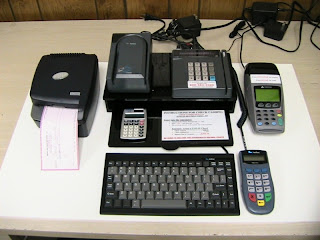
Electronic Chip Credit Card’s Concept
The Chip stores data in its memory making transaction really simple as all your personal details will be included in the cheap. This will contribute to commerce making payment faster, safer and incredibly easy to handle. The only thing you’ll need to do is enter the pin number that will validate ownership of the financial product associated with the card as well as your identity.
The electronic chip replaces the old magnetic band. This band was a security problem due to the possibility for an unscrupulous person to access, read, modify, write or delete the information stored on it with very cheap pieces of hardware. Credit card duplication became a common practice and in many countries you are required to show some ID when paying with a credit card.
Information Safety
The electronic chip credit cards help keep data safe and avoid information from being forged and tampered. Thus, these new cards are proving to be a lot more reliable than magnetic band credit cards. The sole problem is that you need to remember the pin number and that access to your pin number implies access to all of your information stored on the card. However, this number requires validation from time to time in order to make things even safer. The period of time will be determined by the credit card issuer.
How Does It Function
These credit cards do not need to be passed through the reader, since they work with a chip, you just need to deep it into the terminal and all the information is immediately read. You won’t have to worry about damaging or demagnetizing the card as these chips are a lot more resistant. The chip reader is also capable of reading and saving information on the chip. Thus, a store will be able to store proprietary data on a card thus making it possible to add award programs, information for making deliveries, etc.
Also, since these cards do not require a magnetic band, they can be incredibly small. Inside the small chip you can include mobile ATM facilities, remote ticketing, online payments, and many more services that will be added as the technology becomes more and more popular with time. These cards will be able to unify several accounts, debit and credit facilities, telephone number, etc. Amazingly these chip equipped credit cards will make online as well as offline purchases a very simple, fast and secure procedure.
---
You will find more useful tips and interesting articles on this subject and other financial related topics by clicking Here
Article Source: http://EzineArticles.com/?expert=Mary_Wise
http://EzineArticles.com/?Electronic-Chip-Equipped-Credit-Cards&id=397361
By Mary Wise
This amazing tool simplifies the credit card payment process and contributes to the eradication of identity fraud and theft from online as well as offline transactions.
For many years the chip technology has been in the electronic industry being protagonist of every mayor technology breakthrough. Now, the chip technology has made its appearance in the world of finances and payments. It will most definitely contribute to making transactions safer and securer.

Electronic Chip Credit Card’s Concept
The Chip stores data in its memory making transaction really simple as all your personal details will be included in the cheap. This will contribute to commerce making payment faster, safer and incredibly easy to handle. The only thing you’ll need to do is enter the pin number that will validate ownership of the financial product associated with the card as well as your identity.
The electronic chip replaces the old magnetic band. This band was a security problem due to the possibility for an unscrupulous person to access, read, modify, write or delete the information stored on it with very cheap pieces of hardware. Credit card duplication became a common practice and in many countries you are required to show some ID when paying with a credit card.
Information Safety
The electronic chip credit cards help keep data safe and avoid information from being forged and tampered. Thus, these new cards are proving to be a lot more reliable than magnetic band credit cards. The sole problem is that you need to remember the pin number and that access to your pin number implies access to all of your information stored on the card. However, this number requires validation from time to time in order to make things even safer. The period of time will be determined by the credit card issuer.
How Does It Function
These credit cards do not need to be passed through the reader, since they work with a chip, you just need to deep it into the terminal and all the information is immediately read. You won’t have to worry about damaging or demagnetizing the card as these chips are a lot more resistant. The chip reader is also capable of reading and saving information on the chip. Thus, a store will be able to store proprietary data on a card thus making it possible to add award programs, information for making deliveries, etc.
Also, since these cards do not require a magnetic band, they can be incredibly small. Inside the small chip you can include mobile ATM facilities, remote ticketing, online payments, and many more services that will be added as the technology becomes more and more popular with time. These cards will be able to unify several accounts, debit and credit facilities, telephone number, etc. Amazingly these chip equipped credit cards will make online as well as offline purchases a very simple, fast and secure procedure.
---
You will find more useful tips and interesting articles on this subject and other financial related topics by clicking Here
Article Source: http://EzineArticles.com/?expert=Mary_Wise
http://EzineArticles.com/?Electronic-Chip-Equipped-Credit-Cards&id=397361
Wednesday, April 25, 2007
Credit Card Terminals
The Three Categories Of Credit Card Terminals
By Jim Saka
While costing you a relatively small amount, credit card terminals can have an enormous impact on your business. Credit cards are the most common method of payment by customers today in all types of stores, particularly retail and restaurant. Because of this, it is vital that your business is up to date with a quality credit card terminal. There are several basic forms of terminals, but they all fall under three different categories.
The first kind of credit card terminal is the traditional terminal. The most basic traditional terminal includes a magnetic stripe reader, a keypad to enter prices and other information, and a small display. Each terminal has its own display style, which allows you to pick and choose to meet your needs. The larger the display, the easier it will be for you to see the display. Another feature that is common amongst most new traditional terminals is a backlit display, which allows you to see the display in low light settings.
There are two different kinds of printers you can choose from for your traditional terminal, a built-in printer or a separate unit. It is often easier to handle one machine altogether, making the built-in printer more popular. However, the main thing to consider with the printer is its price, speed and reliability.
The next kind of credit card terminal is the wireless terminal. Wireless terminals are very convenient for businesses with temporary locations, taxi drivers and large lot businesses because of its ability to be moved. However, you should really think about whether it is a necessity to have a wireless terminal, because they are more expensive.
Other things that should be considered when selecting a wireless terminal include battery life, the range of the terminal, weight, and its shock resistance. The shock resistance is vital because you have to assume that any terminal you purchase will be dropped from time to time.
The last kind of credit card terminal is virtual terminals. If you are looking for a terminal to use for over the phone or an internet business, this is the kind for you. This allows you to have a terminal without actually having a physical terminal in your presence. Your merchant account that is required should be able to provide you with the necessary software to handle the transactions. All you have to do is type in the credit card number and the software will handle the authorization for you.
While there are several different models and forms of credit card terminals to choose from, they all fall under the three categories mentioned above. The most pricey terminals are going to be the wireless terminal and virtual terminal, but the traditional terminal has its benefits as well. Make sure to do the necessary research to find the best credit card terminal for your business.
For more information about Jim Saka or to find out how your business can can benefit from accepting credit cards online or at a place of business visit United Bank Card's merchant account services websites.
Copyright (c) 2007 Jim Saka
Article Source: http://EzineArticles.com/?expert=Jim_Saka
http://EzineArticles.com/?The-Three-Categories-Of-Credit-Card-Terminals&id=412639
By Jim Saka
While costing you a relatively small amount, credit card terminals can have an enormous impact on your business. Credit cards are the most common method of payment by customers today in all types of stores, particularly retail and restaurant. Because of this, it is vital that your business is up to date with a quality credit card terminal. There are several basic forms of terminals, but they all fall under three different categories.
The first kind of credit card terminal is the traditional terminal. The most basic traditional terminal includes a magnetic stripe reader, a keypad to enter prices and other information, and a small display. Each terminal has its own display style, which allows you to pick and choose to meet your needs. The larger the display, the easier it will be for you to see the display. Another feature that is common amongst most new traditional terminals is a backlit display, which allows you to see the display in low light settings.
There are two different kinds of printers you can choose from for your traditional terminal, a built-in printer or a separate unit. It is often easier to handle one machine altogether, making the built-in printer more popular. However, the main thing to consider with the printer is its price, speed and reliability.
The next kind of credit card terminal is the wireless terminal. Wireless terminals are very convenient for businesses with temporary locations, taxi drivers and large lot businesses because of its ability to be moved. However, you should really think about whether it is a necessity to have a wireless terminal, because they are more expensive.
Other things that should be considered when selecting a wireless terminal include battery life, the range of the terminal, weight, and its shock resistance. The shock resistance is vital because you have to assume that any terminal you purchase will be dropped from time to time.
The last kind of credit card terminal is virtual terminals. If you are looking for a terminal to use for over the phone or an internet business, this is the kind for you. This allows you to have a terminal without actually having a physical terminal in your presence. Your merchant account that is required should be able to provide you with the necessary software to handle the transactions. All you have to do is type in the credit card number and the software will handle the authorization for you.
While there are several different models and forms of credit card terminals to choose from, they all fall under the three categories mentioned above. The most pricey terminals are going to be the wireless terminal and virtual terminal, but the traditional terminal has its benefits as well. Make sure to do the necessary research to find the best credit card terminal for your business.
For more information about Jim Saka or to find out how your business can can benefit from accepting credit cards online or at a place of business visit United Bank Card's merchant account services websites.
Copyright (c) 2007 Jim Saka
Article Source: http://EzineArticles.com/?expert=Jim_Saka
http://EzineArticles.com/?The-Three-Categories-Of-Credit-Card-Terminals&id=412639
Tuesday, April 17, 2007
Credit Card Terminals
Boosting Your Credit Score To Get The Best Credit Card Deal
By Ethan Hunter
Making Your Credit Rating Work For You
One of the basics of getting the most competitive credit card
deal in the market is to ensure you have the best credit record
possible. Few of us are lucky enough to be earning a six-figure
salary, and many people are likely to have other financial
undertakings that a potential lender will want to take into
account. None of this, however, should preclude you from
getting a top bracket credit rating. Getting a credit score of
700+ may be beyond some consumers, but lifting your credit
rating to a point at which lenders will furnish you with some
of their best deals is not an insurmountable task.
It can be a stressful time applying for a new line of credit.
Many consumers get upset when applying for a new credit card
when they find out their credit score is low, and they have
poor credit.
A lower credit score can impact the amount of money that
financial institutions will lend you. It can also impact on the
rate of interest at which you borrow. In some cases, the
difference between having an excellent credit rating and a poor
one could be getting a 0% deal on your credit card, and paying
an APR that touches 30%. Sometimes financial institutions won’t
even lend you a dime, based on a low credit score.
A variety of factors can impact on your credit score. Generally
speaking, lenders love stability more than anything else. Paying
amounts owed on time is but one of many variables. It could be
that you’ve lived in more than one address over the preceding
three years; or having borrowings with a variety of
institutions. It could even be down to the fact that you’ve got
too much credit already at your disposal.
But just what goes into your credit score? A report by the
analytics experts Fair Issac recently broke credit scoring down
into five categories and assessed their importance on the final
rating.
Most important was how you had paid you bills in the past with
the most emphasis on recent activity. Naturally, paying all
your bills on time is good; paying them consistently late is
bad. Having accounts that were sent to collection agencies is
even worse, though nowhere near as bad as declaring bankruptcy.
Paying your bills in a timely and consistent manner contributed
to 35 percent of the score.
Next most important was the amount of money you owe and the
amount of available credit at your disposal. The assessment of
outstanding debt fell into several categories, and included
credit cards, car loans, mortgages, home equity lines, and so
on. Also given consideration was the total amount of credit
available. If a customer has 10 credit cards that each have
$10,000 credit limits, that totals $100,000 of available
credit. Generally speaking, people who have a lot of credit
available tend to use it. This makes them a less attractive
credit risk. This amounts to 30 per cent of the total credit
score.
Also impacting on credit scores is the length of credit history
(15 percent). The longer a customer has had credit –
particularly if it's with the same financial institution – the
more points they get.
The mix of credit contributes 10 percent to the credit score.
Customers with the best scores have a mix of both revolving
credit, such as credit cards, and installment credit, such as
mortgages and car loans. Statistically, consumers with a richer
variety of experiences are better credit risks. As far as banks
and credit card companies are concerned, they know how to
handle money.
The last important factor taken into consideration is new
credit applications (10 percent). If you’ve applied for several
lines of credit in the past few months this will negatively
impact your credit score.
The antidotes to this are simple. Pay your bills in a timely
manner, particularly in the months leading up to an
application. Close unused retail store cards, credit cards and
old bank accounts with overdraft facilities. Maintain
long-standing and healthy arrangements with banks and other
lenders. Don’t apply for a stack of credit cards, loans and so
on, unless you’re absolutely sure it’s the right product for
you. It goes without saying that you shouldn’t apply for a
credit line unless you use it.
There’s a sixth factor that can contribute enormously to a
negative credit rating. In 2001 it became possible for
customers to get their own credit score in exchange for a small
fee. In the past, prospective lenders were able to keep this
score hidden, and many unscrupulous institutions used this
knowledge to charge a higher APR on credit. By being aware of
your credit score lenders can't lie and say your score was low
and charge higher APR on your credit card.
More importantly, it’s vital that you get rid of black marks on
your credit rating. Errors unfortunately happen all the time,
and erroneous reports of missed payments, referrals to debt
collectors and even bankruptcies can scupper your chances of
getting a low rate of interest and even a credit card
altogether. Query everything and haggle with credit reference
agencies so that only the information that is listed on your
credit history that should be there, is there.
You can find out your credit history by applying to one of
several companies. Many offer an online service and can furnish
you with the information both quickly and cheaply. Equifax,
Truecredit and Consumerinfo are some of the best such
providers.
Patience is the key to getting a great credit score – and the
best credit deals. You’re never going to make the jump from
having a credit score of 500 to one of 700 overnight, but by
implementing easy to follow and practical strategies, you can
quite easily leverage your credit score to a rating that is
respected by all concerned.
About the Author: Ethan Hunter is the author of many credit
related articles. If you are looking for help with Home Loans
or any type of credit issue please visit us at
http://www.creditcardunlimited.com
Source: http://www.isnare.com
By Ethan Hunter
Making Your Credit Rating Work For You

One of the basics of getting the most competitive credit card
deal in the market is to ensure you have the best credit record
possible. Few of us are lucky enough to be earning a six-figure
salary, and many people are likely to have other financial
undertakings that a potential lender will want to take into
account. None of this, however, should preclude you from
getting a top bracket credit rating. Getting a credit score of
700+ may be beyond some consumers, but lifting your credit
rating to a point at which lenders will furnish you with some
of their best deals is not an insurmountable task.
It can be a stressful time applying for a new line of credit.
Many consumers get upset when applying for a new credit card
when they find out their credit score is low, and they have
poor credit.
A lower credit score can impact the amount of money that
financial institutions will lend you. It can also impact on the
rate of interest at which you borrow. In some cases, the
difference between having an excellent credit rating and a poor
one could be getting a 0% deal on your credit card, and paying
an APR that touches 30%. Sometimes financial institutions won’t
even lend you a dime, based on a low credit score.
A variety of factors can impact on your credit score. Generally
speaking, lenders love stability more than anything else. Paying
amounts owed on time is but one of many variables. It could be
that you’ve lived in more than one address over the preceding
three years; or having borrowings with a variety of
institutions. It could even be down to the fact that you’ve got
too much credit already at your disposal.
But just what goes into your credit score? A report by the
analytics experts Fair Issac recently broke credit scoring down
into five categories and assessed their importance on the final
rating.
Most important was how you had paid you bills in the past with
the most emphasis on recent activity. Naturally, paying all
your bills on time is good; paying them consistently late is
bad. Having accounts that were sent to collection agencies is
even worse, though nowhere near as bad as declaring bankruptcy.
Paying your bills in a timely and consistent manner contributed
to 35 percent of the score.
Next most important was the amount of money you owe and the
amount of available credit at your disposal. The assessment of
outstanding debt fell into several categories, and included
credit cards, car loans, mortgages, home equity lines, and so
on. Also given consideration was the total amount of credit
available. If a customer has 10 credit cards that each have
$10,000 credit limits, that totals $100,000 of available
credit. Generally speaking, people who have a lot of credit
available tend to use it. This makes them a less attractive
credit risk. This amounts to 30 per cent of the total credit
score.
Also impacting on credit scores is the length of credit history
(15 percent). The longer a customer has had credit –
particularly if it's with the same financial institution – the
more points they get.
The mix of credit contributes 10 percent to the credit score.
Customers with the best scores have a mix of both revolving
credit, such as credit cards, and installment credit, such as
mortgages and car loans. Statistically, consumers with a richer
variety of experiences are better credit risks. As far as banks
and credit card companies are concerned, they know how to
handle money.
The last important factor taken into consideration is new
credit applications (10 percent). If you’ve applied for several
lines of credit in the past few months this will negatively
impact your credit score.
The antidotes to this are simple. Pay your bills in a timely
manner, particularly in the months leading up to an
application. Close unused retail store cards, credit cards and
old bank accounts with overdraft facilities. Maintain
long-standing and healthy arrangements with banks and other
lenders. Don’t apply for a stack of credit cards, loans and so
on, unless you’re absolutely sure it’s the right product for
you. It goes without saying that you shouldn’t apply for a
credit line unless you use it.
There’s a sixth factor that can contribute enormously to a
negative credit rating. In 2001 it became possible for
customers to get their own credit score in exchange for a small
fee. In the past, prospective lenders were able to keep this
score hidden, and many unscrupulous institutions used this
knowledge to charge a higher APR on credit. By being aware of
your credit score lenders can't lie and say your score was low
and charge higher APR on your credit card.
More importantly, it’s vital that you get rid of black marks on
your credit rating. Errors unfortunately happen all the time,
and erroneous reports of missed payments, referrals to debt
collectors and even bankruptcies can scupper your chances of
getting a low rate of interest and even a credit card
altogether. Query everything and haggle with credit reference
agencies so that only the information that is listed on your
credit history that should be there, is there.
You can find out your credit history by applying to one of
several companies. Many offer an online service and can furnish
you with the information both quickly and cheaply. Equifax,
Truecredit and Consumerinfo are some of the best such
providers.
Patience is the key to getting a great credit score – and the
best credit deals. You’re never going to make the jump from
having a credit score of 500 to one of 700 overnight, but by
implementing easy to follow and practical strategies, you can
quite easily leverage your credit score to a rating that is
respected by all concerned.
About the Author: Ethan Hunter is the author of many credit
related articles. If you are looking for help with Home Loans
or any type of credit issue please visit us at
http://www.creditcardunlimited.com
Source: http://www.isnare.com
Monday, April 16, 2007
Credit Card Terminals
Credit Card Skimming
By Michael Russell
Credit card skimming is an international problem accounting for losses of over one-billion dollars a year. This type of credit card scam is common in Europe, Asia and Latin America and is starting to show up more in the United States.
This scam is easy to run - it can happen when you give your credit card to a store employee to make a purchase. That employee may not only swipe your card for payment, but also swipe the card with a small machine they hold in their hand known as a skimmer. This small device will store the information from your card into its system. The skimmer is equipped to hold information on hundreds of credit cards and from this information, the crooks are able to produce counterfeit cards.
There are skimming rings working all over the world and once your information is put into the skimmer, it is then downloaded into a computer, ready to be emailed to anyone worldwide.
A decade ago, this fraud was not as easy to accomplish as it is today, due to the fact skimmers were very large and had to be hidden under counters. However, with the advance of technology in the past ten years, they have been able to streamline the skimmer, making it small enough to be hand-held and out of sight of the unwary customer making a purchase. These skimmers are easy to buy; in fact, they can be purchased over the internet at around $300. The machine needed to make counterfeit credit cards is a much larger investment - costing $5,000 to $10,000.
Another form of this scam is done by actually pulling information directly from the credit card terminals. A skimmer bug is placed into the terminal and later retrieved with credit card information on it. Only the older terminals can be violated in this way and with the onset of new credit card terminals, this has alleviated much of this bugging.
As soon as the crooks have their needed information on you, they will start their shopping sprees using your credit card number. They purchase all types of merchandise and charge it to your credit card. Over half of credit card fraud is done over the internet with online purchases. With shopping on the internet becoming more and more popular, card fraud on the internet has also increased.
The crooks will also use the internet to verify the card information is valid. They will purchase many low-ticket items through various websites, checking to see if the card is active. Internet processing of card purchases is done by real-time processing and not handled by a person; thus, no chance of them being caught trying to use a stolen card number.
The cardholder is a victim of this crime and is responsible for up to $50 of the total amount charged on his card, while the real victim in all of this is the merchant whose employee did the skimming. The merchant is held 100% responsible and risks losing the merchandise, and is responsible for paying the fees of the investigation. Investigation fees paid by consumers and businesses in 2003 amounted to an estimated half-billion dollars in annual revenue for credit card companies. This money is used by the card companies to offset costs to investigate charge back claims by their customers.
The crook who perpetrates this card fraud, for the most part, goes unpunished. There is a limit of $2,000 before a criminal investigation can be started; the crooks know this and will not exceed $2,000 on their purchases from any one business. Thus, they are pretty much free to continue to victimize consumers and businesses.
Michael Russell
Your Independent guide to Credit Cards
Article Source: http://EzineArticles.com/?expert=Michael_Russell
http://EzineArticles.com/?Credit-Card-Skimming&id=363585
By Michael Russell
Credit card skimming is an international problem accounting for losses of over one-billion dollars a year. This type of credit card scam is common in Europe, Asia and Latin America and is starting to show up more in the United States.
This scam is easy to run - it can happen when you give your credit card to a store employee to make a purchase. That employee may not only swipe your card for payment, but also swipe the card with a small machine they hold in their hand known as a skimmer. This small device will store the information from your card into its system. The skimmer is equipped to hold information on hundreds of credit cards and from this information, the crooks are able to produce counterfeit cards.
There are skimming rings working all over the world and once your information is put into the skimmer, it is then downloaded into a computer, ready to be emailed to anyone worldwide.
A decade ago, this fraud was not as easy to accomplish as it is today, due to the fact skimmers were very large and had to be hidden under counters. However, with the advance of technology in the past ten years, they have been able to streamline the skimmer, making it small enough to be hand-held and out of sight of the unwary customer making a purchase. These skimmers are easy to buy; in fact, they can be purchased over the internet at around $300. The machine needed to make counterfeit credit cards is a much larger investment - costing $5,000 to $10,000.
Another form of this scam is done by actually pulling information directly from the credit card terminals. A skimmer bug is placed into the terminal and later retrieved with credit card information on it. Only the older terminals can be violated in this way and with the onset of new credit card terminals, this has alleviated much of this bugging.
As soon as the crooks have their needed information on you, they will start their shopping sprees using your credit card number. They purchase all types of merchandise and charge it to your credit card. Over half of credit card fraud is done over the internet with online purchases. With shopping on the internet becoming more and more popular, card fraud on the internet has also increased.
The crooks will also use the internet to verify the card information is valid. They will purchase many low-ticket items through various websites, checking to see if the card is active. Internet processing of card purchases is done by real-time processing and not handled by a person; thus, no chance of them being caught trying to use a stolen card number.
The cardholder is a victim of this crime and is responsible for up to $50 of the total amount charged on his card, while the real victim in all of this is the merchant whose employee did the skimming. The merchant is held 100% responsible and risks losing the merchandise, and is responsible for paying the fees of the investigation. Investigation fees paid by consumers and businesses in 2003 amounted to an estimated half-billion dollars in annual revenue for credit card companies. This money is used by the card companies to offset costs to investigate charge back claims by their customers.
The crook who perpetrates this card fraud, for the most part, goes unpunished. There is a limit of $2,000 before a criminal investigation can be started; the crooks know this and will not exceed $2,000 on their purchases from any one business. Thus, they are pretty much free to continue to victimize consumers and businesses.
Michael Russell
Your Independent guide to Credit Cards
Article Source: http://EzineArticles.com/?expert=Michael_Russell
http://EzineArticles.com/?Credit-Card-Skimming&id=363585
Saturday, April 14, 2007
Credit Card Terminals
Credit Card Processing
By Thomas Morva
Nowadays, almost all establishments accept credit card payments. This is because many consumers make their purchases using their credit cards, and establishments who do not accept credit card payments risks losing potential sales. Given this, it is then essential for any company that intends to sell products in the market to make sure that their stores can accept credit payments. There’s good news, though! Today, accepting credit cards is usually a fairly easy process because companies can gain access to the tools that they need to be able to process credit card payments from a number of sources.
Setting up a merchant account
The first step in accepting credit cards is setting up a merchant account. This will involve locating the right merchant account provider or credit card processor. Many businesses do this through the banks where they do their business banking. However, not all banks provide credit card processing services.
A good source of information is any trade associations that a business belongs to, which may have negotiated rates with a certain credit card processor that the business could contact. Another good source of leads is from other businesses that already accept credit card payments. On the other hand, given that most processors aggressively pursue clients especially start up companies, it is most likely that these processors will contact new business owners and offer them their services.
In deciding on which credit card processor to use, it is a good idea to employ canvassing strategies, which includes interviewing each credit processor and asking them questions that can help business owners pick the right processor. Some of these questions include asking them about their fees, their rates, and other services that they provide their clients. After which, business owners then should analyze which processor can give them the best deal for the credit card processing services that they are offering.
Nowadays, no business establishment should be without credit card processing capabilities. This is because given that most people make many of their purchases using their credit cards, establishments that do not accept credit card payments risk losing a significant number of sales. The good news is that today, the tools that businesses need to be able to accept credit card payments, which includes merchant accounts, are easily accessible, as there are a large number of companies that provide credit card processing services.
Credit Card Processing provides detailed information on Credit Card Processing, Online Credit Card Processing, Credit Card Processing Software, Wireless Credit Card Processing and more. Credit Card Processing is affiliated with Wireless Credit Card Terminals.
Article Source: http://EzineArticles.com/?expert=Thomas_Morva
http://EzineArticles.com/?Credit-Card-Processing&id=255743
By Thomas Morva
Nowadays, almost all establishments accept credit card payments. This is because many consumers make their purchases using their credit cards, and establishments who do not accept credit card payments risks losing potential sales. Given this, it is then essential for any company that intends to sell products in the market to make sure that their stores can accept credit payments. There’s good news, though! Today, accepting credit cards is usually a fairly easy process because companies can gain access to the tools that they need to be able to process credit card payments from a number of sources.
Setting up a merchant account
The first step in accepting credit cards is setting up a merchant account. This will involve locating the right merchant account provider or credit card processor. Many businesses do this through the banks where they do their business banking. However, not all banks provide credit card processing services.
A good source of information is any trade associations that a business belongs to, which may have negotiated rates with a certain credit card processor that the business could contact. Another good source of leads is from other businesses that already accept credit card payments. On the other hand, given that most processors aggressively pursue clients especially start up companies, it is most likely that these processors will contact new business owners and offer them their services.
In deciding on which credit card processor to use, it is a good idea to employ canvassing strategies, which includes interviewing each credit processor and asking them questions that can help business owners pick the right processor. Some of these questions include asking them about their fees, their rates, and other services that they provide their clients. After which, business owners then should analyze which processor can give them the best deal for the credit card processing services that they are offering.
Nowadays, no business establishment should be without credit card processing capabilities. This is because given that most people make many of their purchases using their credit cards, establishments that do not accept credit card payments risk losing a significant number of sales. The good news is that today, the tools that businesses need to be able to accept credit card payments, which includes merchant accounts, are easily accessible, as there are a large number of companies that provide credit card processing services.
Credit Card Processing provides detailed information on Credit Card Processing, Online Credit Card Processing, Credit Card Processing Software, Wireless Credit Card Processing and more. Credit Card Processing is affiliated with Wireless Credit Card Terminals.
Article Source: http://EzineArticles.com/?expert=Thomas_Morva
http://EzineArticles.com/?Credit-Card-Processing&id=255743
Subscribe to:
Comments (Atom)